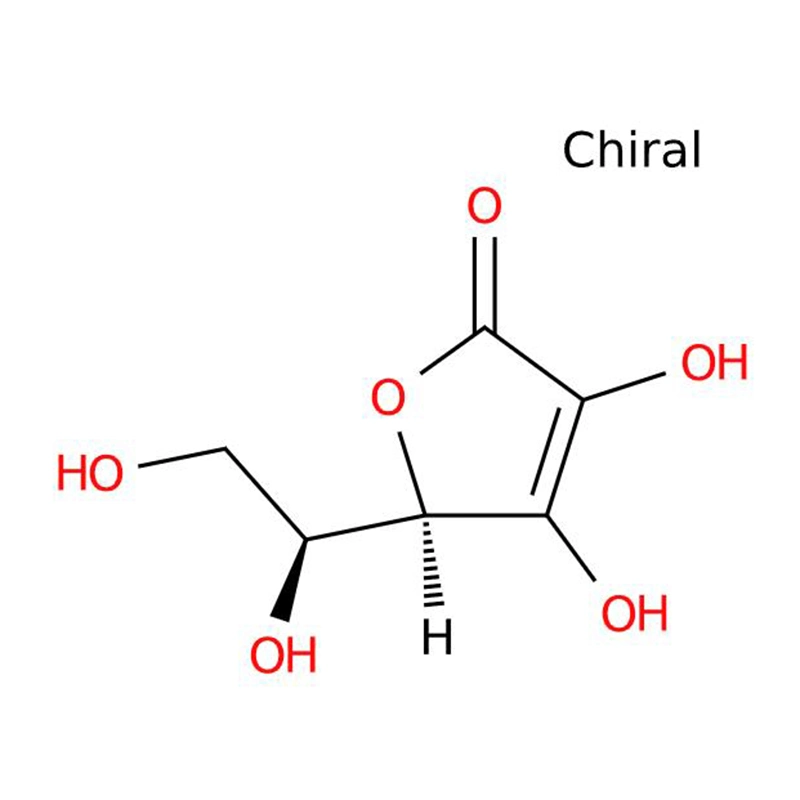
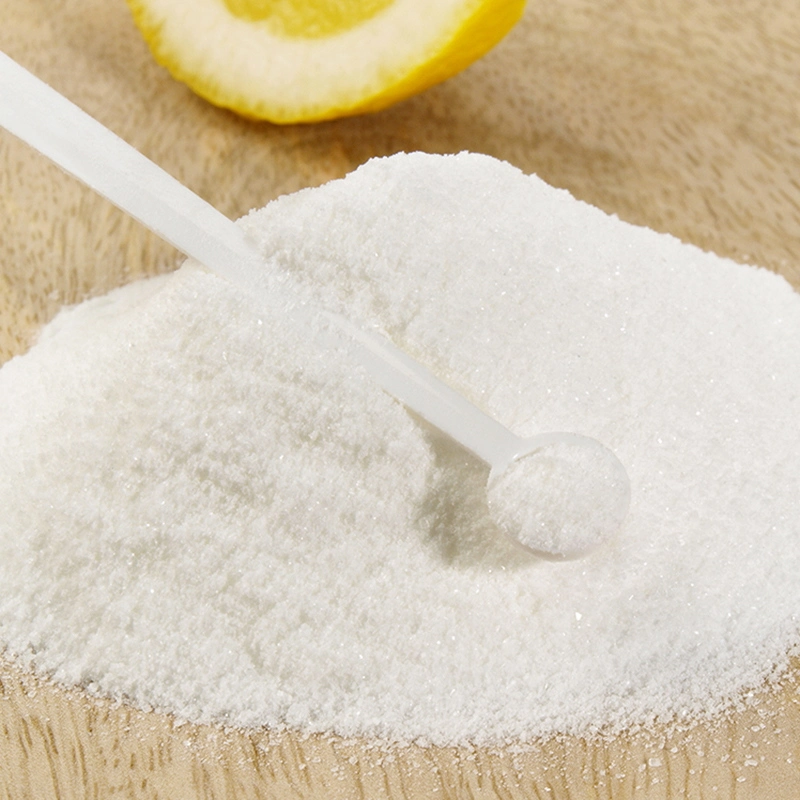
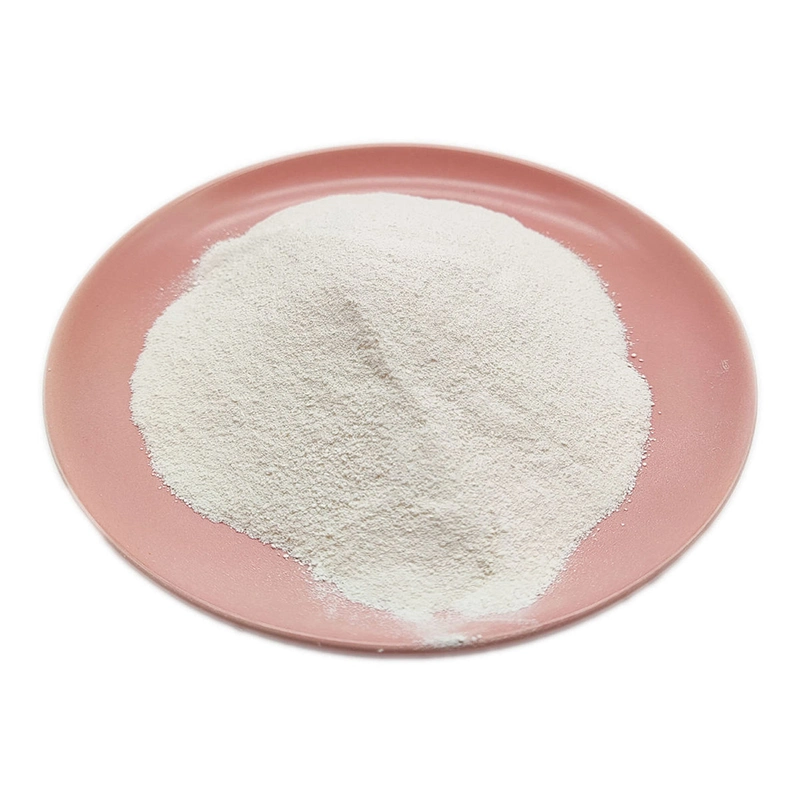
Vitamin C, alternatively called L-ascorbic acid, represents a crucial nutrient required by higher primates and certain other life forms. While most organisms can synthesize ascorbic acid through metabolic processes, humans constitute a significant exception. Its most recognized function relates to preventing scurvy, which results from vitamin C deficiency. Pharmacologically, vitamin C is classified among ascorbate compounds. Within biological systems, it serves as an effective antioxidant, shielding tissues from oxidative damage. Additionally, vitamin C functions as an essential cofactor in enzymatic reactions.
| Melting point | 190-194 °C (dec.) |
| alpha | 20.5 º (c=10,H2O) |
| Boiling point | 227.71°C (rough estimate) |
| density | 1,65 g/cm3 |
| FEMA | 2109 | ASCORBIC ACID |
| refractive index | 21 ° (C=10, H2O) |
| storage temp. | Store at +5°C to +30°C. |
| solubility | H2O: 50 mg/mL at 20 °C, clear, nearly colorless |
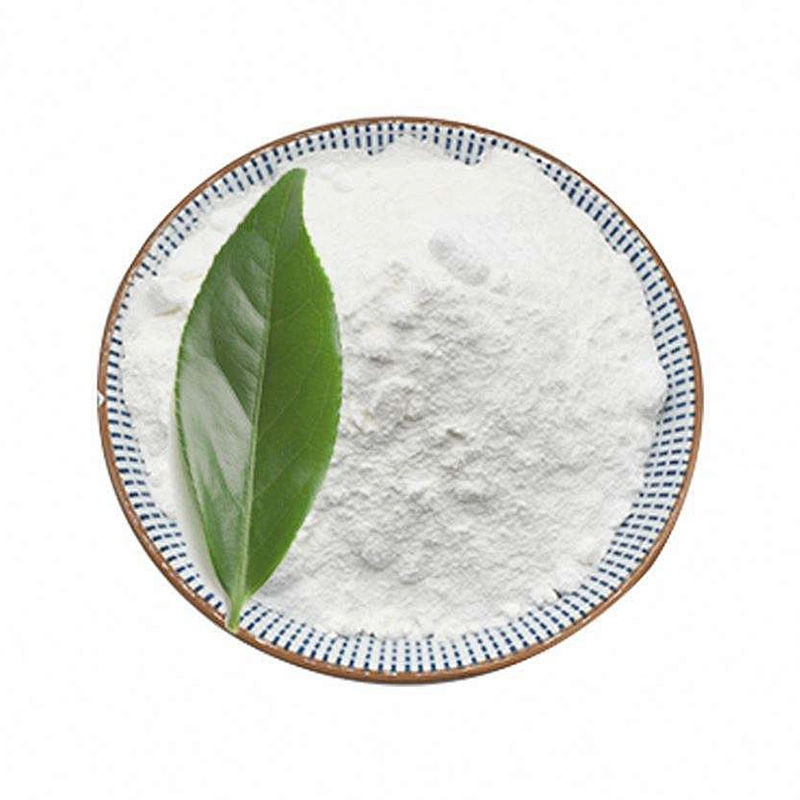
| form | powder |
| pka | 4.04, 11.7(at 25℃) |
| color | white to slightly yellow |
| PH | 3.59(1 mM solution);3.04(10 mM solution);2.53(100 mM solution); |
| Odor | Odorless |
| PH Range | 1 – 2.5 |
| biological source | synthetic (organic) |
| Odor Type | green |
| optical activity | [α]25/D 19.0 to 23.0°, c = 10% in H2O |
| Water Solubility | 333 g/L (20 ºC) |
| Merck | 14830 |
| BRN | 84272 |
| BCS Class | 1 |
| Stability: | Stable. May be weakly light or air sensitive. Incompatible with oxidizing agents, alkalies, iron, copper. |
| InChIKey | CIWBSHSKHKDKBQ-JLAZNSOCSA-N |
| LogP | -1.85 |
| CAS DataBase Reference | 50-81-7(CAS DataBase Reference) |
| NIST Chemistry Reference | L-Ascorbic acid(50-81-7) |
| EPA Substance Registry System | Ascorbic acid (50-81-7) |
| Absorption | cut-off at 306nm in H2O at 1M |
| Safety Information | |
| Hazard Codes | |
| Risk Statements | |
| Safety Statements | 24/25-36-26 |
| WGK Germany | 1 |
| RTECS | CI7650000 |
| TSCA | Yes |
| HS Code | 29362700 |
| Hazardous Substances Data | 50-81-7(Hazardous Substances Data) |
| Toxicity | LD50 oral in rat: 11900mg/kg |