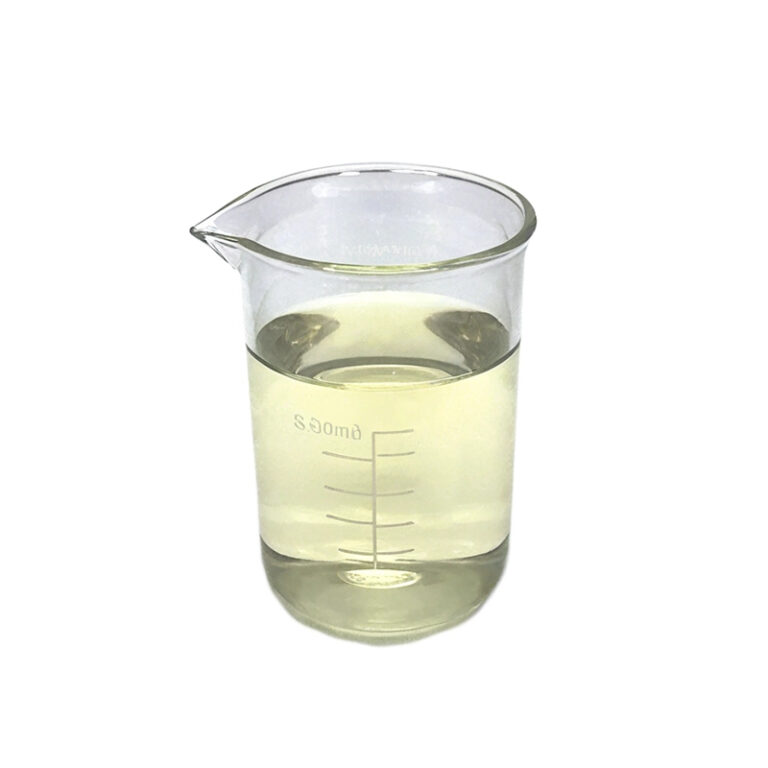



Tricresyl Phosphate (TCP) is a chemical mixture with a slightly pungent odor. It consists of three isomers: the normal and meta isomers are liquids, while the para isomer is a crystalline solid. TCP is produced by reacting cresol with phosphorus oxychloride using an aluminum catalyst. It is used to recover phenol residues from gas plant wastewater and as a plasticizer in the plastics industry. Plasticizers like TCP enhance the flexibility, hardness, water resistance, and flammability of plastic materials, with up to 50% TCP added to polyvinyl chloride (PVC). However, TCP is toxic to humans and animals, causing neuropathy, paralysis, and even death through ingestion, inhalation, or skin absorption.

Parameters
| Melting point | <-40°C |
| Boiling point | 265 °C10 mm Hg(lit.) |
| Density | 1.143 g/mL at 25 °C(lit.) |
| Pour Point | -28 |
| Vapor pressure | 0.03 mm Hg ( 25 °C) |
| Refractive index | n20/D 1.555(lit.) |
| Fp | >230 °F |
| Storage temp. | Store below +30°C. |
| Solubility | organic solvents: miscible(lit.) |
| Form | Powder |
| Color | White to off-white |
| Water Solubility | INSOLUBLE |
| Merck | 14,9763 |
| Dielectric constant | 4.0(80℃) |
| Stability | Stable. Incompatible with strong oxidizing agents. May soften some plastics. Hydrolyzes slowly under alkaline conditions. |
| InChIKey | ISNNXHQBIBWQHG-UHFFFAOYSA-N |
| LogP | 5.93 |
| Surface tension | 40.9mN/m at 20°C |
| CAS DataBase Reference | 1330-78-5(CAS DataBase Reference) |
| EPA Substance Registry System | Tricresyl phosphate (1330-78-5) |
Safety Information
| Hazard Codes | Xn,N,T |
| Risk Statements | 21/22-51/53-39/23/24/25-62-50/53 |
| Safety Statements | 28-61-45-28A-20/21-60-36/37 |
| RIDADR | UN 2574 6.1/PG 2 |
| WGK Germany | 2 |
| RTECS | TD0175000 |
| Autoignition
Temperature |
770 °F |
| TSCA | Yes |
| HS Code | 2919 90 00 |
| HazardClass | 6.1 |
| PackingGroup | II |
| Hazardous
Substances Data |
1330-78-5(Hazardous Substances Data) |
| Toxicity | cat,LD50,skin,1500mg/kg (1500mg/kg),BEHAVIORAL: ATAXIAPERIPHERAL NERVE AND SENSATION: FLACCID PARALYSIS WITHOUT ANESTHESIA (USUALLY NEUROMUSCULAR BLOCKAGE),Toxicology Letters. Vol. 1000(Sp, |

Tricresyl Phosphate is utilized in the production of vinyl plastics as a plasticizer, flame retardant, and solvent for nitrocellulose. It is also employed in cellulosic molding compounds, as an additive in extreme pressure lubricants, and as a nonflammable fluid for hydraulic systems. Additionally, it serves as a lead scavenger in gasoline and is used to sterilize specific surgical instruments, as noted in Yust, Bame, US 2889212 (1959 to Shell).