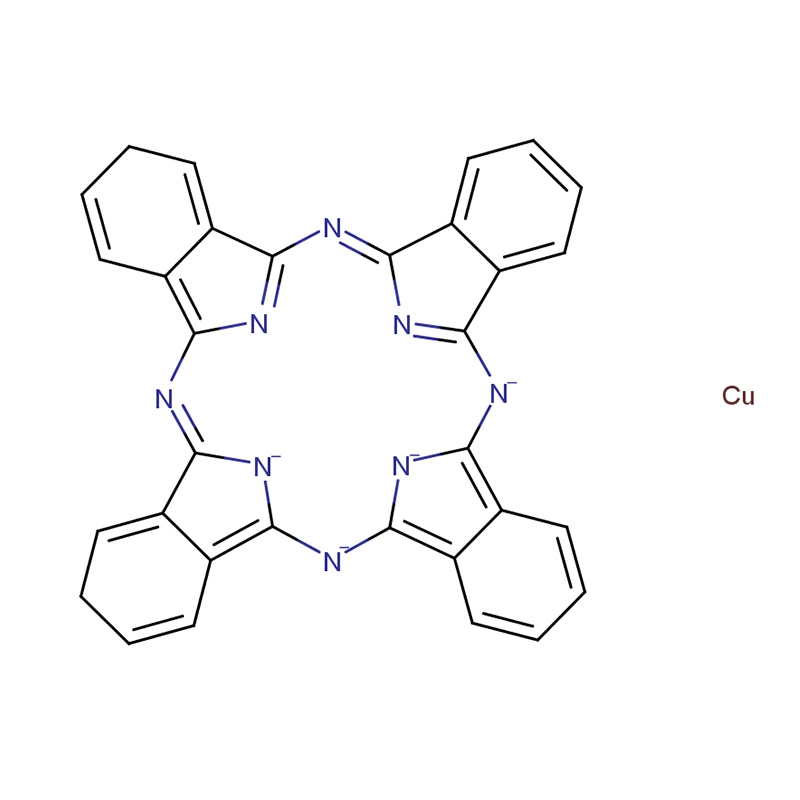
Copper(II) phthalocyanine, or CuPc, has been utilized as an electron donor in combination with fullerene-C60 or phenyl-C61-butyric acid methyl ester (PCBM) in vacuum-deposited organic photovoltaics (OPV). Initial power conversion efficiency of around 1% has been achieved, with a significant enhancement to 4% when a pentacene-doped CuPc layer is used.
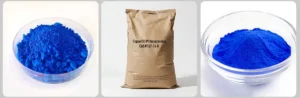
Copper(II) phthalocyanine Chemical Properties
| Melting point | 600°C (dec.) |
| Density | 1.62[at 20℃] |
| Storage temp | Inert atmosphere,Room Temperature |
| Solubility | insoluble in H2O, ethanol; soluble in concHSO 4 |
| Colour Index | 74160 |
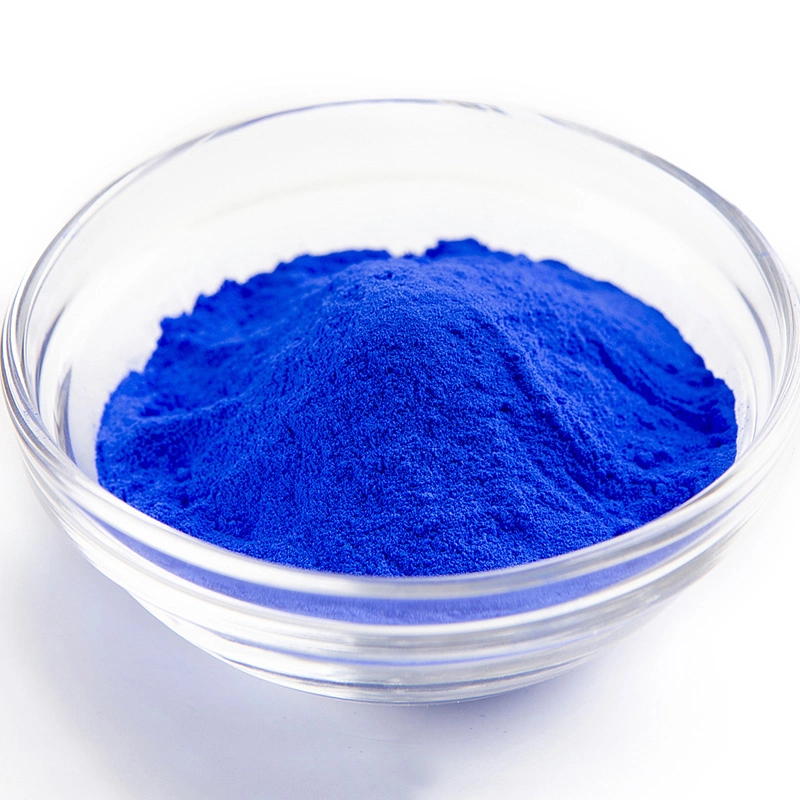
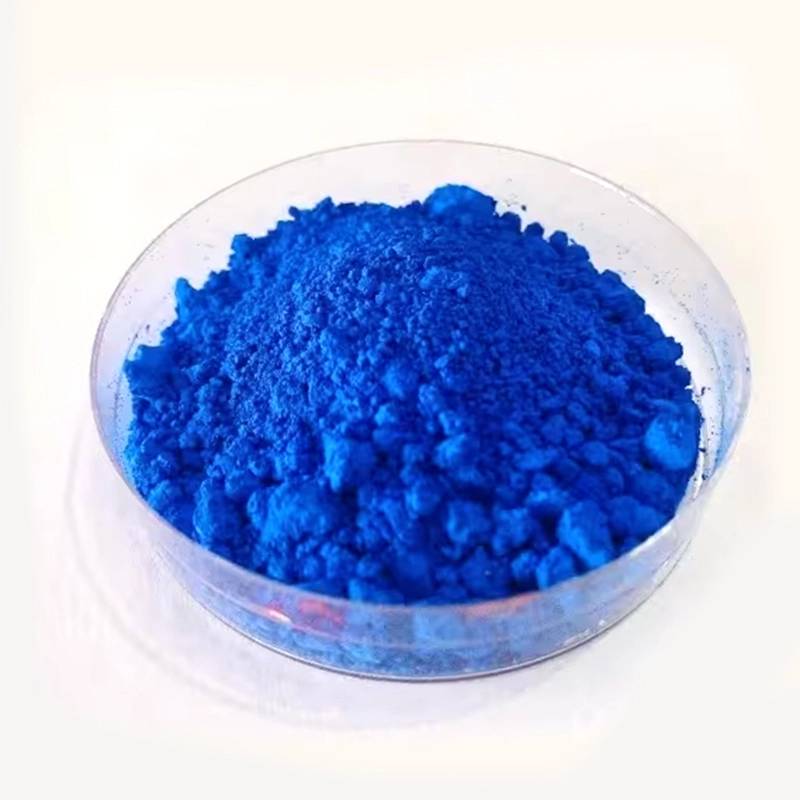
| Form | Fine Crystalline Powder |
| Color | Dark blue |
| Odor | odorless |
| Water Solubility | <0.1 g/100 mL at 20 ºC |
| λmax | 602nm(CHCl3)(lit.) |
| Hydrolytic Sensitivity | 4: no reaction with water under neutral conditions |
| Merck | 14,2520 |
| BRN | 4121848 |
| Exposure limits | ACGIH: TWA 1 mg/m3 NIOSH: IDLH 100 mg/m3; TWA 1 mg/m3 |
| InChIKey | XCJYREBRNVKWGJ-UHFFFAOYSA-N |
| LogP | -1 at 23℃ |
| NIST Chemistry Reference | Copper phthalocyanine(147-14-8) |
| EPA Substance Registry System | C.I. Pigment Blue 15 (147-14-8) |
| Absorption | λmax 678 nm (DMF) |
Safety Information
| Safety Statements | 22-24/25 |
| WGK Germany | – |
| RTECS | GL8510000 |
| TSCA | Yes |
| HS Code | 32041300 |
| Hazardous Substances Data | 147-14-8(Hazardous Substances Data) |
| Toxicity | LD50 intraperitoneal in rat: > 3gm/kg |

Product Usage
Copper(II) phthalocyanine plays a key role in the study of photosensitizer chemistry, particularly for uniform polymerization, luminescence chemistry, and spectrophotometric analysis, as well as in organic synthesis and polymerization. This pigment is widely used in products such as enamels, linoleum, inks, plastics, and rubber items. Additionally, photoisomerizable phthalocyanines are utilized in rewritable CD or DVD printing.